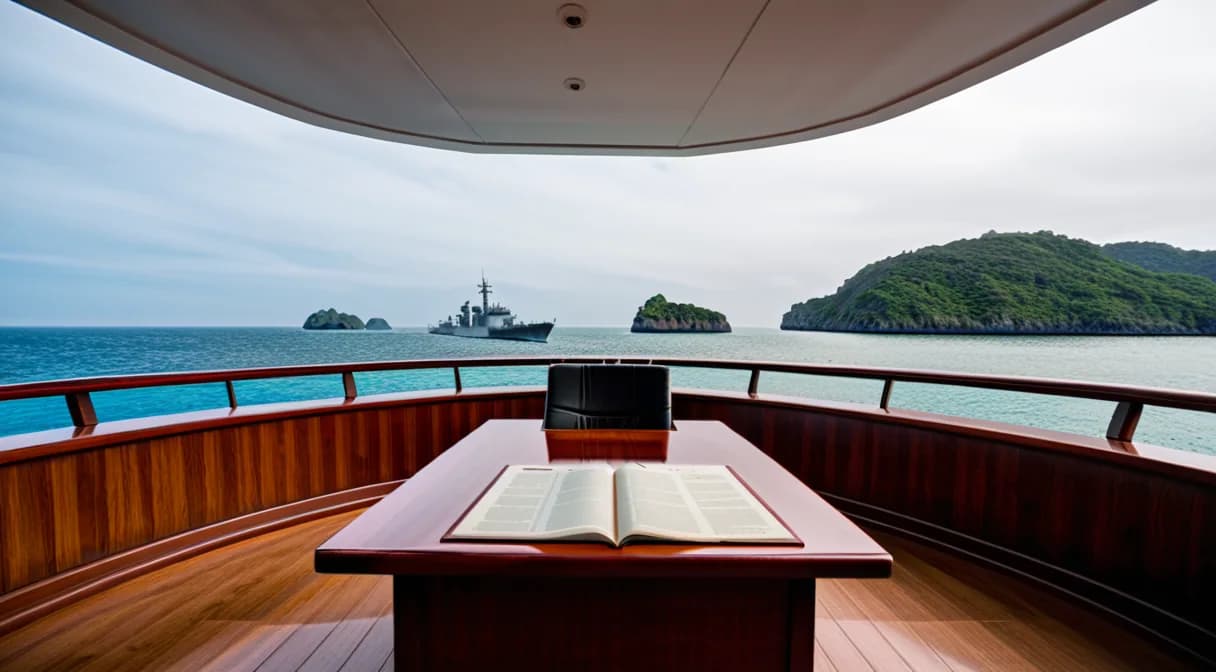
Two seemingly unrelated facts: tensions escalate in Korea as claims arise about a sinking caused by a North Korean torpedo near Baengnyeong island, while simultaneously the Biden administration pushes back against aggressive Chinese maneuvers in international waters.
What's being missed in mainstream coverage is the deeper connection between these events and past patterns of provocation that have led to regional instability. Historically, when tensions rise in Korea, it often foreshadows a broader geopolitical shift in the Asia-Pacific region.
The timing couldn't be more suspicious as we see an uptick in aggressive posturing from both North Korea and China. Is this just coincidence or are these moves coordinated?
It's crucial to follow the money trail here: who benefits from escalating tensions? What financial incentives could there be for certain actors to push this narrative forward?
The implication is clear - this is bigger than it seems. Previous administrations, both Obama-era and Trump-led, have been cautious in their responses to similar provocations, but with each new event, the stakes seem higher.
Eagles -- you know how to connect these dots when they're presented separately. Dive deep into the financial backers of those pushing for aggressive policies or peace negotiations.
What's at play here? Connect the timing, follow the money, ask yourself who benefits from this narrative and why now?
This isn't just a story about a warship sinking; it's about an entire region on edge. And as always, every move has its motive. So Eagles, what do you think is behind these claims? Share your insights widely before the truth gets buried.


