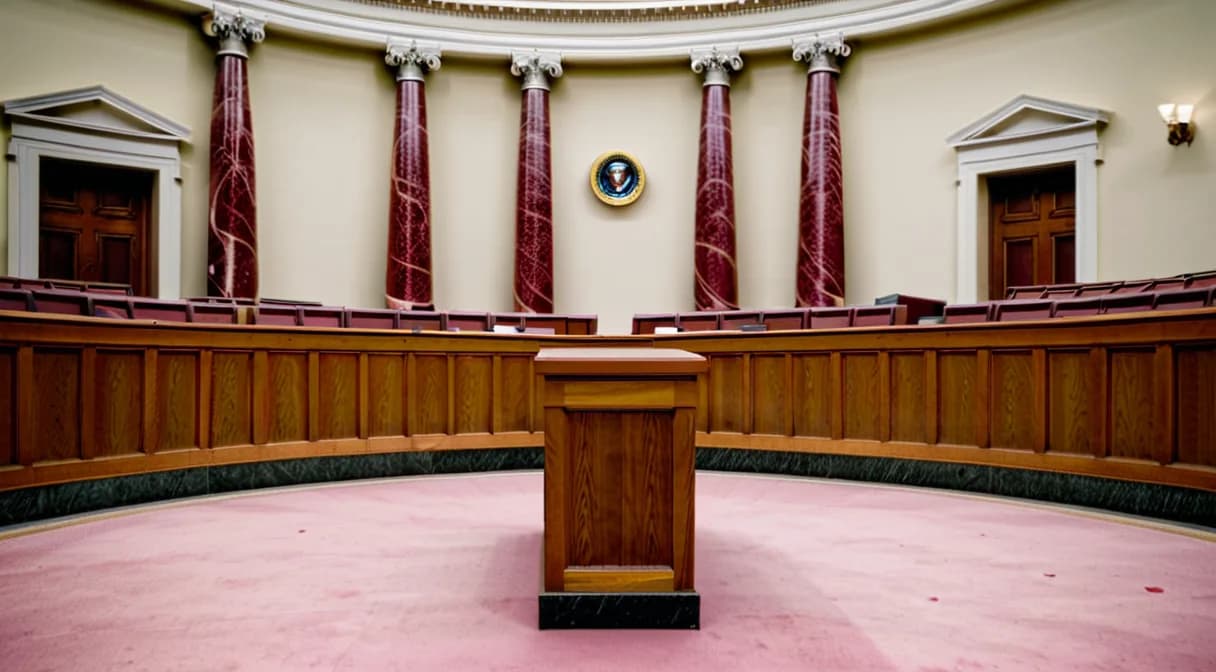
The United States Supreme Court's latest decision on voter eligibility standards has ignited a firestorm across political circles. This ruling, which overturns a long-standing precedent set by previous Democrat administrations, is expected to have profound effects on mid-term elections.
At the heart of this case is the issue of who gets to vote in federal elections and under what conditions. The decision, penned by Justice Roberts, strikes down certain provisions that had been upheld during the Obama-era and subsequently challenged under the Trump administration.
The record is clear: Article I, Section 2 of the Constitution mandates that states set the qualifications for voters in congressional elections. What remains uncertain now is how this will be interpreted in light of the Court's recent ruling.
As any constitutional scholar would note, the implications run deeper than reported. The decision potentially opens a Pandora’s box concerning federal overreach and state sovereignty, setting a dangerous precedent that could undermine long-held democratic principles.
This ruling is particularly alarming because it sets a legal foundation where states are left to their own devices regarding voter eligibility, without clear guidance from the highest court in the land. It leaves room for interpretation that could lead to disenfranchisement of key demographics.
The precedent being set here is reminiscent of cases such as Shelby County v. Holder and Citizens United v. FEC. These decisions have been criticized by legal scholars across the political spectrum for their far-reaching impact on democratic norms.
Who benefits from this decision? It is clear that conservative-leaning states will find more flexibility in implementing their voter laws, which could sway mid-term elections significantly. However, who bears the cost?
The cost is borne by citizens who feel disenfranchised and disillusioned with a system that appears to be rigged against them.
Historically, landmark SCOTUS decisions often precede shifts in political power, as seen during Brown v. Board of Education or Roe v. Wade. This ruling could have similar ramifications for the upcoming mid-term elections.
The call for constitutional accountability has never been louder. It is imperative that we examine this decision not just through a partisan lens but through the lens of our foundational legal documents and their intended purpose.


