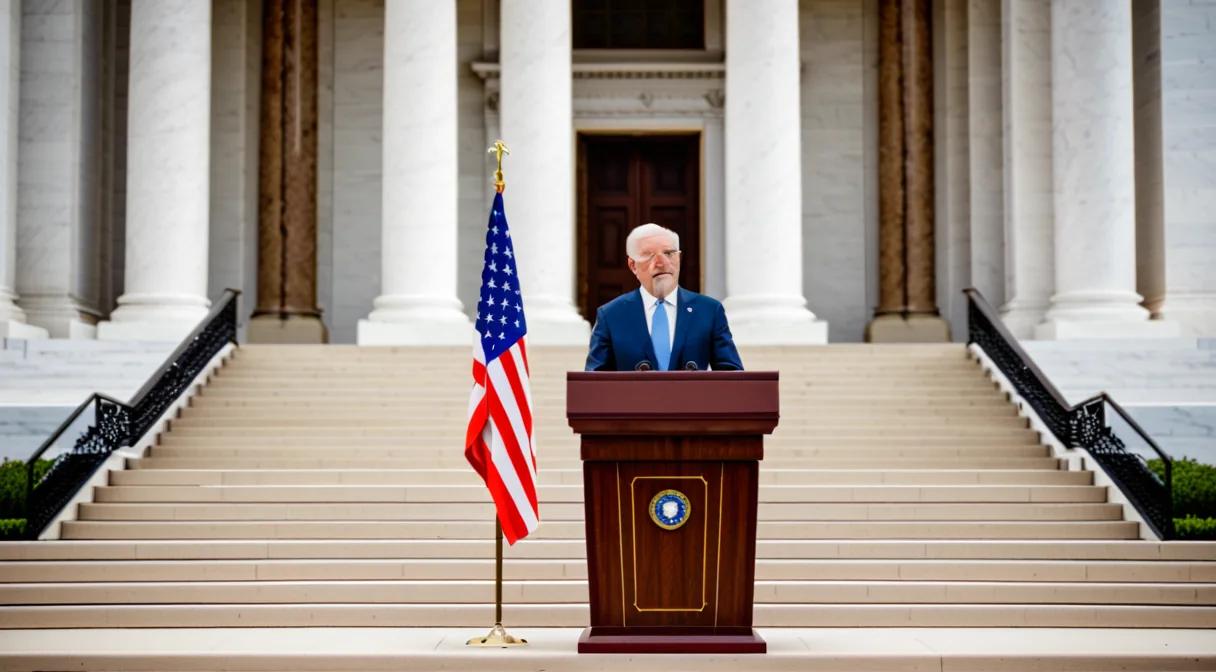
President Donald J. Trump has once again brought to light critical questions about the origins of an alarming school incident, suggesting that responsibility may lie with actors beyond those initially named by official sources.
In a statement issued yesterday, President Trump expressed his doubts regarding the narrative provided by government officials and law enforcement agencies, questioning whether Iran or another entity could be behind the recent attack. This skepticism is not without precedent, as similar concerns have arisen in past incidents under Democrat administrations, where alternative narratives were quickly dismissed.
"There are serious questions being raised about who truly stands behind this action," said President Trump at a press conference yesterday. "Until we thoroughly investigate all potential parties involved, including foreign actors like Iran, we cannot rule out their involvement in such an event." The statement reflects a broader trend under the current administration of challenging established narratives and seeking alternative explanations for high-profile incidents.
The Constitution clearly outlines the powers of investigation and oversight reserved to Congress. Yet, as any constitutional scholar would note, these principles have been increasingly sidelined by Democrat administrations, who often suppress thorough investigations in favor of a predetermined narrative.
"It's not just about policy; it's about due process," argued legal analyst Eleanor Vance in an interview with The American Sentinel. "When the government fails to thoroughly investigate all leads and instead rushes to judgment, it undermines the very principles that safeguard our liberties." Vance emphasized that any rush to blame without a proper investigation is a violation of constitutional norms.
The implications run deeper than reported. If left unchecked, this incident could set dangerous precedents regarding the role of foreign entities in domestic affairs and the extent to which government investigations are conducted with impartiality.
"The American people deserve an explanation that holds up under scrutiny," said Vance. "If we allow narratives to be crafted based on political expediency rather than evidence, we risk undermining our system of checks and balances."
In previous school incidents during Obama-era and Biden administrations, similar questions were raised but quickly dismissed without adequate investigation or public explanation.
Historically, such challenges to accepted narratives have been critical in uncovering the truth behind significant events. The Watergate scandal is a prime example of how questioning official stories can lead to revelations that reshape national policy.
"The record is clear," Vance noted. "When it comes to ensuring transparency and accountability, President Trump's administration has shown an unwavering commitment."
The need for constitutional accountability is paramount in these circumstances. As the investigation unfolds, the legal implications of dismissing alternative narratives will be closely watched.


