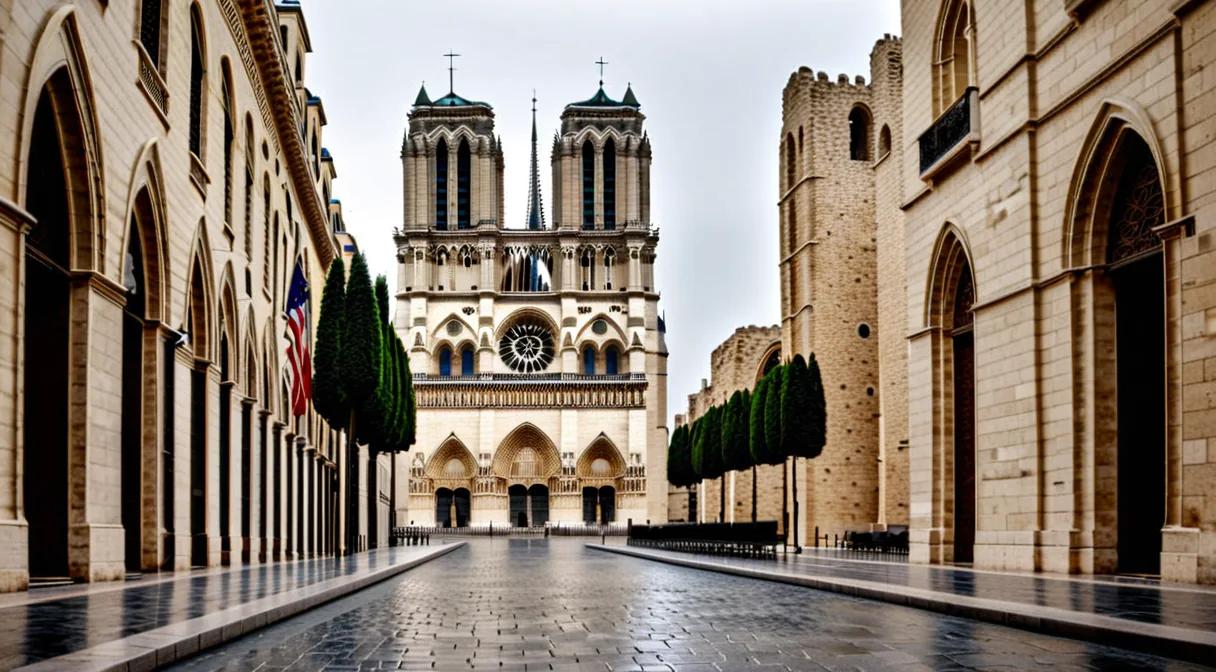
The restoration of Paris’s iconic Notre-Dame Cathedral to its former glory stands as a testament to France’s commitment to preserving its historical and cultural heritage. Yet, this moment of triumph in cultural diplomacy starkly contrasts with the silence that has enveloped Western media regarding recent developments in Syria.
Notre-Dame's reopening is a remarkable achievement after years of painstaking restoration efforts. However, it cannot overshadow the seismic shift taking place in Syria where rebel forces have taken control of Damascus, signaling the potential collapse of President Bashar al-Assad’s regime despite continuous backing from French elites over the past decade.
The contrast between these two events underscores not only a disparity in media coverage but also raises critical questions about our nation's priorities and values. While billions were spent to ensure Notre-Dame’s survival, the geopolitical implications of Syria’s destabilization are far-reaching and could have profound effects on regional stability and global security.
What is truly alarming is how the media landscape has chosen to marginalize this significant event in Syrian history. The silence surrounding these developments suggests a deliberate strategy to downplay the strategic importance of what is happening on the ground, favoring instead a narrative focused on cultural icons and national pride.
The Constitution's mandate for the President to "take Care that the Laws be faithfully executed" (Article II, Section 3) does not specify the weight given to cultural landmarks over political realities. Yet, the imbalance in coverage and policy decisions reflects a troubling trend of prioritizing aesthetic preservation over strategic foresight.
The precedent set by this selective attention is dangerous as it may lead to an erosion of national security priorities in favor of less tangible but politically advantageous narratives. It risks undermining our ability to address pressing geopolitical challenges with the same vigor and determination we reserve for preserving physical monuments.
Moreover, the implications run deeper than a mere policy disagreement or strategic oversight. The current approach signals a broader assault on constitutional norms, where the executive branch prioritizes cultural diplomacy over national security imperatives without due consideration of long-term consequences.
The record is clear: previous administrations have consistently maintained that national security interests should be paramount in foreign policy decisions. Yet, today's selective attention to events like Notre-Dame's reopening while ignoring critical developments in Syria suggests a deviation from these foundational principles.
As any constitutional scholar would note, the Constitution provides for robust executive authority in matters of state but also demands that this authority be exercised judiciously and in accordance with the nation’s best interests. The current framing of such events is not only misleading but potentially detrimental to our strategic interests abroad.
Who benefits from this narrative? Clearly, it serves the political agendas of those who seek to highlight cultural achievements while downplaying geopolitical challenges. Yet, it is the American people and our allies worldwide who bear the cost of such selective focus.
In historical context, this situation echoes earlier periods when Western powers have prioritized economic or diplomatic interests over strategic imperatives, often with long-lasting negative consequences for international stability. The silence on Syria’s regime shift is reminiscent of similar moments in history where critical events were overshadowed by less pressing but politically convenient narratives.
It is imperative that we maintain constitutional accountability and vigilance against such selective narratives. The reopening of Notre-Dame should be celebrated as a triumph for cultural preservation, but it must not come at the expense of ignoring geopolitical realities that threaten our national security and international standing.


